 BONECALLER
Player Preferences
For Players Who Enjoy Planning More Than Fast Clicking
Prefer preparing a solution to executing rapid commands? Explore the appeal and limits of Bonecaller's automatic combat and deliberate army-building.
Some of the most satisfying decisions in a game happen before anything moves. You notice a weakness, find a piece that could cover it, and rearrange the plan. The next battle becomes a way to discover whether your reasoning was sound. If that sequence appeals more than executing a rapid series of commands, automatic combat deserves a closer look.
Bonecaller puts that sequence around an undead army. Your heroes carry out the fight; you shape the team and its development. The resulting rhythm gives deliberate decisions a central place, with your attention moving between preparing the army and understanding what it does.
Mechanical effort and mental effort are different
A game can demand little rapid input while still asking you to read, compare, remember, and choose. Bonecaller's automatic battles reduce the need to command individual attacks. They leave questions about formation, survivability, affinity, and progression with the player.
Those questions can be enjoyable precisely because they allow room to think. Your attention can settle on one problem: what does this army need before another attempt? You can compare a creature's place in the group with the development it still needs, instead of dividing that moment between analysis and issuing attack commands.
This distinction is useful when evaluating your own preferences. You may want a game with fewer rapid clicks because planning is your favorite part. You may instead want something that requires very little thought after a demanding day. Those are separate desires, and the same game need not satisfy both.
A loss can leave a question worth answering
Take a simple imagined case: an attack-heavy Host deals promising damage but loses its front line too soon. This is an illustration of the system, not a report from a tested build. Several explanations could deserve attention. Its protection may be inadequate, its development may lag behind the encounter, or its chosen strengths may be poorly matched to the threat.
Bonecaller gives you a formation to inspect and development choices to reconsider. The important change of pace is that the result becomes a question you can carry into a different screen. You can spend your attention comparing the available answers before committing to another attempt.
The pleasure, for a planning-minded player, is turning an initially messy outcome into a specific idea. You bring that idea to the next battle and look for evidence. Winning matters, but understanding a previous failure can also make a session feel productive. The useful effort is noticing and interpreting, with less emphasis on rapid execution.
Of course, automatic execution means you cannot repair every mistake through personal reflexes. A poorly prepared formation cannot rely on you to dodge for it at the last instant. Being comfortable with that limitation is part of enjoying the format.
Repetition becomes observation
Repeated combat has a different role when you are evaluating a setup. It gives you more occasions to notice what the army does consistently and where it struggles. Bonecaller's Farm mode repeats a selected cleared floor, while descent continues into further challenges.
For a prospective player, that suggests two rhythms. One is pushing into uncertainty. The other is letting a known setup work while developing the resources or recruits for another change. You would be choosing a game that includes both.
Repetition does not automatically become interesting because it is attached to strategy. If reviewing small changes leaves you cold, the format may feel slow. If you enjoy seeing a plan become more dependable, a repeatable encounter can give your decisions a clear reference point.
The important question is what you pay attention to while watching. Following one part of the army can be enough to make an ordinary battle interesting: did its protection last, and did the rest of the formation have time to work? If your attention instead stays on how long it will take before you can act again, the rhythm may be a poor fit.
There are still decisions worth giving time
The Bone Forge consumes compatible heroes to develop a target. That is a consequential choice, not a fast click you should make merely because a button is available. Later systems add more ways to shape the army and more information to consider.
Automatic combat therefore shifts attention toward preparation and review. It does not remove reading or judgment from the experience. This matters especially when you are looking for a game to fit a specific energy level or routine.
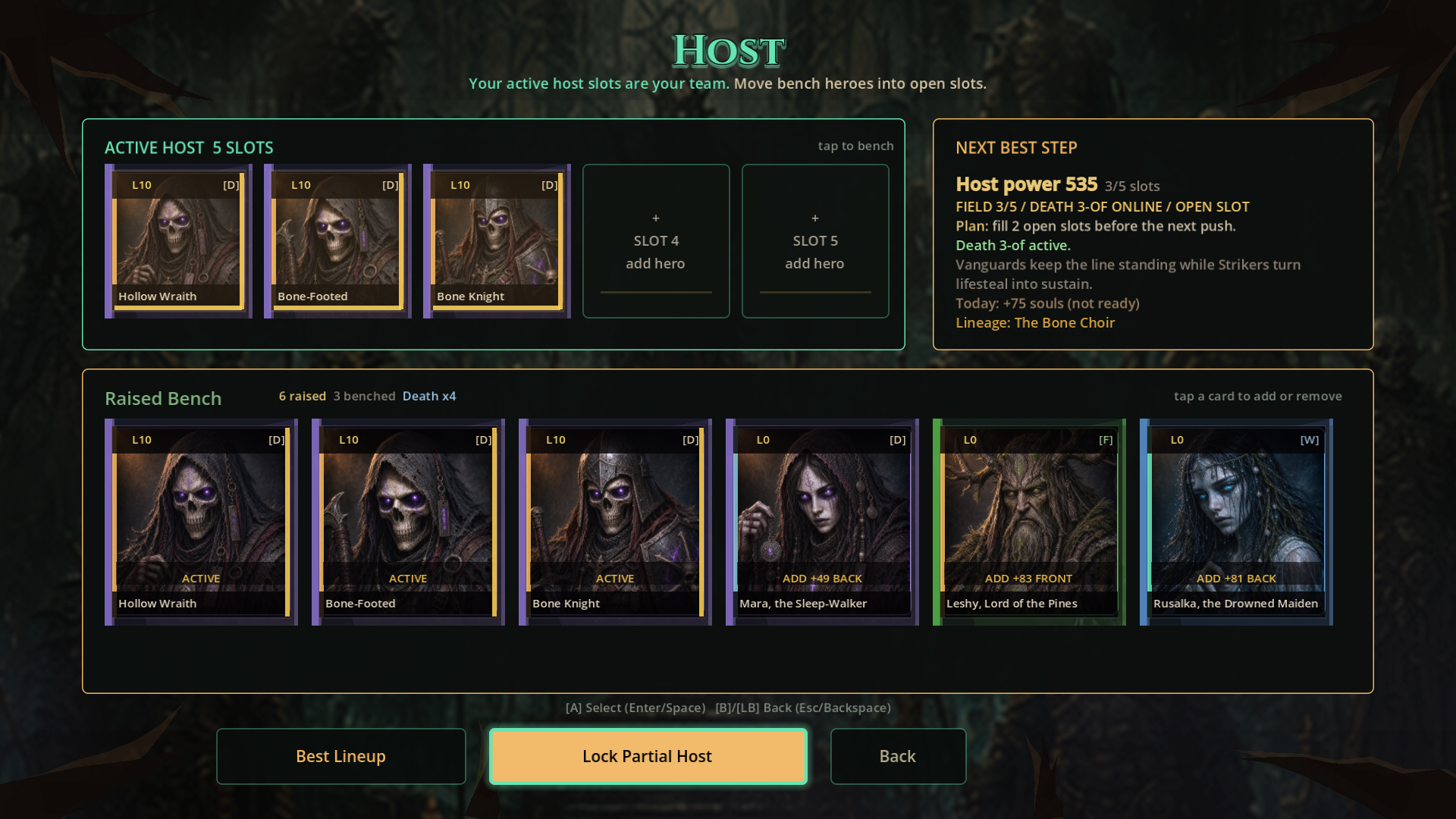
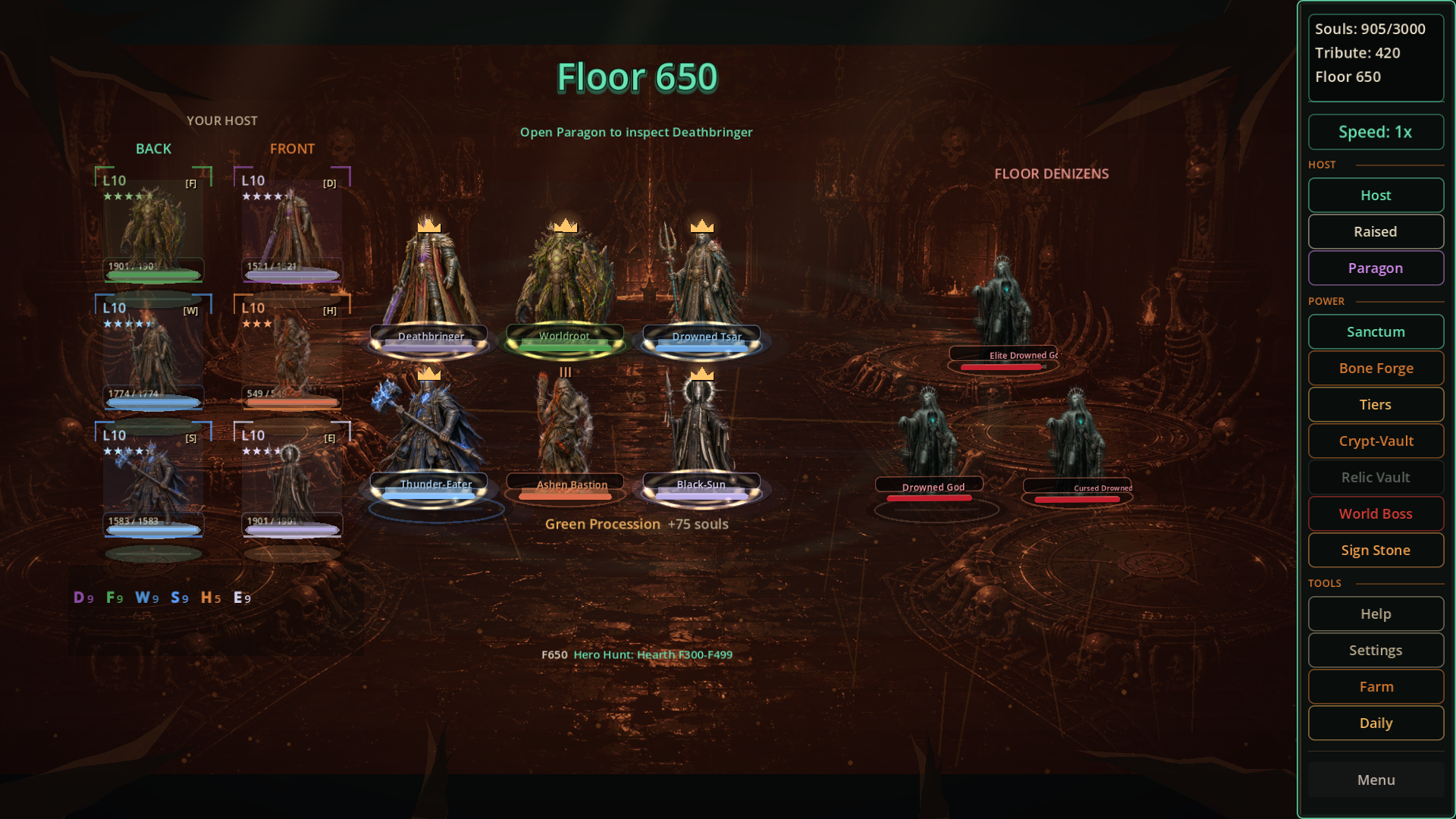
The interface is part of that rhythm. Hero cards, formation slots, and development previews give the planning a visible place. In the footage, you can see how much information arrives together and where your attention would move between the collection and the battlefield.
Choose the kind of involvement you enjoy
Bonecaller may interest you if you like the thought “I could arrange this differently” more than “I could execute that faster.” Its current alpha combines automatic battles with an expanding collection and decisions that take place around the fight.
The appeal is having room to turn an observation into an idea and give that idea another attempt. Watch a section of gameplay to see how Bonecaller moves between the army you are preparing and the battles that put it to work.
Game details reflect the September 15, 2026 alpha. See current release information.