 BONECALLER
Choosing a Game
Watch Before You Choose: What Bonecaller's Gameplay Shows
Read Bonecaller's real Host, battle, and Forge captures for evidence of the game you would play, then separate visible features from unproven assumptions.
The most useful question to ask of game footage is simple: what would I actually spend time doing here? A dark-fantasy image can establish a mood, but a gameplay screen shows the relationship between that mood and your decisions. Bonecaller's real captures reveal an army-building game organized around a Host, automatic battles, and deliberate development.
The footage and screenshots represent a game in development. They are evidence of visible systems and presentation, not a substitute for playing a finished release. You can still use them to make a much more informed judgment about whether the central experience interests you.
The Host screen shows selection
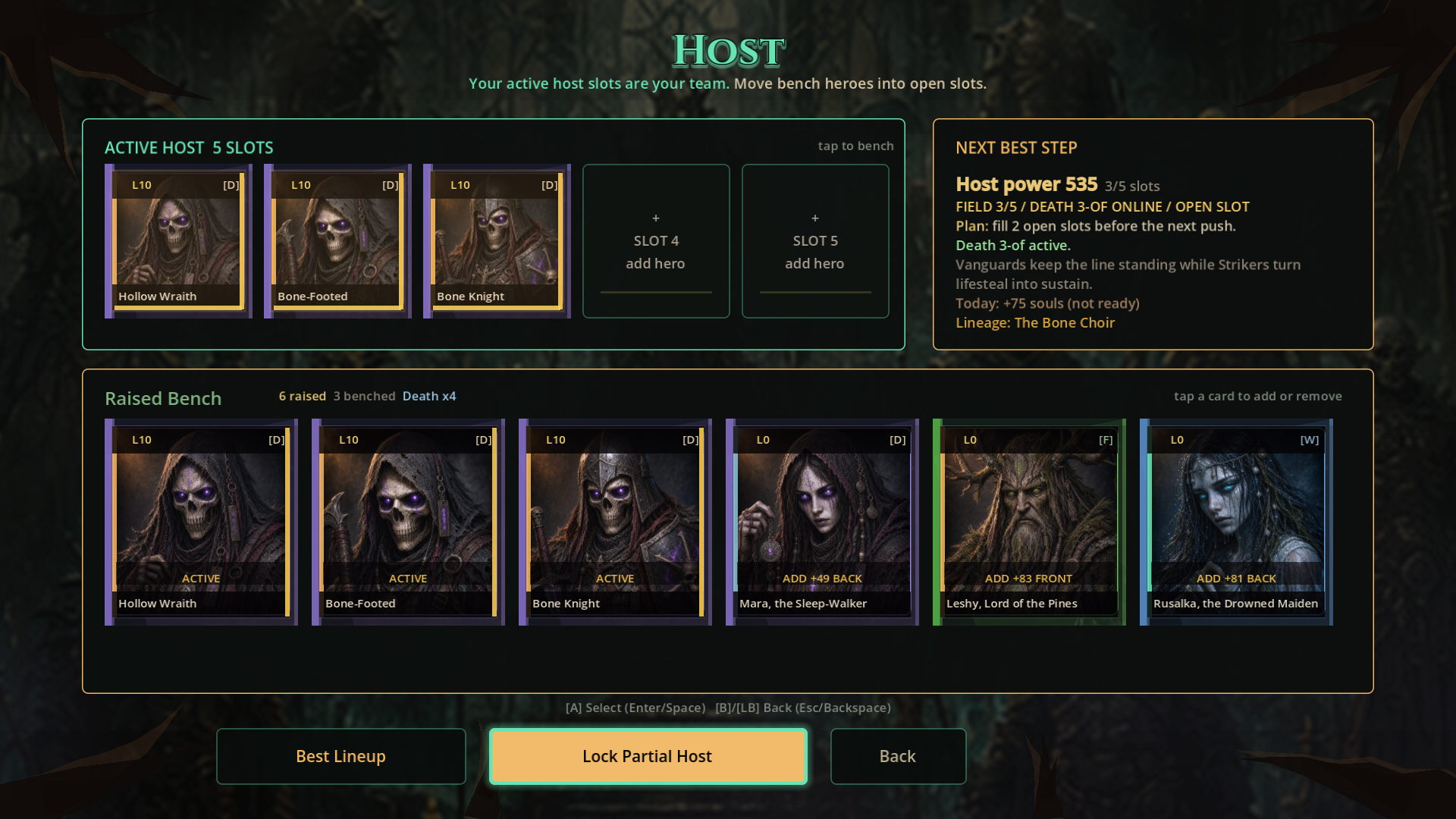
One published Host capture separates the active team from a Raised Bench below it. Creature portraits are cards with names, levels, and affinity markings. Empty active slots remain visible beside the selected heroes.
That layout communicates a basic decision without requiring knowledge of the full game. Your collection and your fielded team are different things. There are creatures you own, and there are creatures you choose to use together.
In this capture, Hollow Wraith, Bone-Footed Skeleton, and Bone Knight occupy the active area. The bench also shows creatures including Mara, Leshy, and Rusalka. The arrangement makes it possible to imagine a substitution or an addition before understanding every stat.
The screen also places a summary beside the active team. You can see that the interface tries to connect the current selection to a next action. Whether that presentation feels clear to you is something the actual capture helps you judge.
The battle screen shows a formation
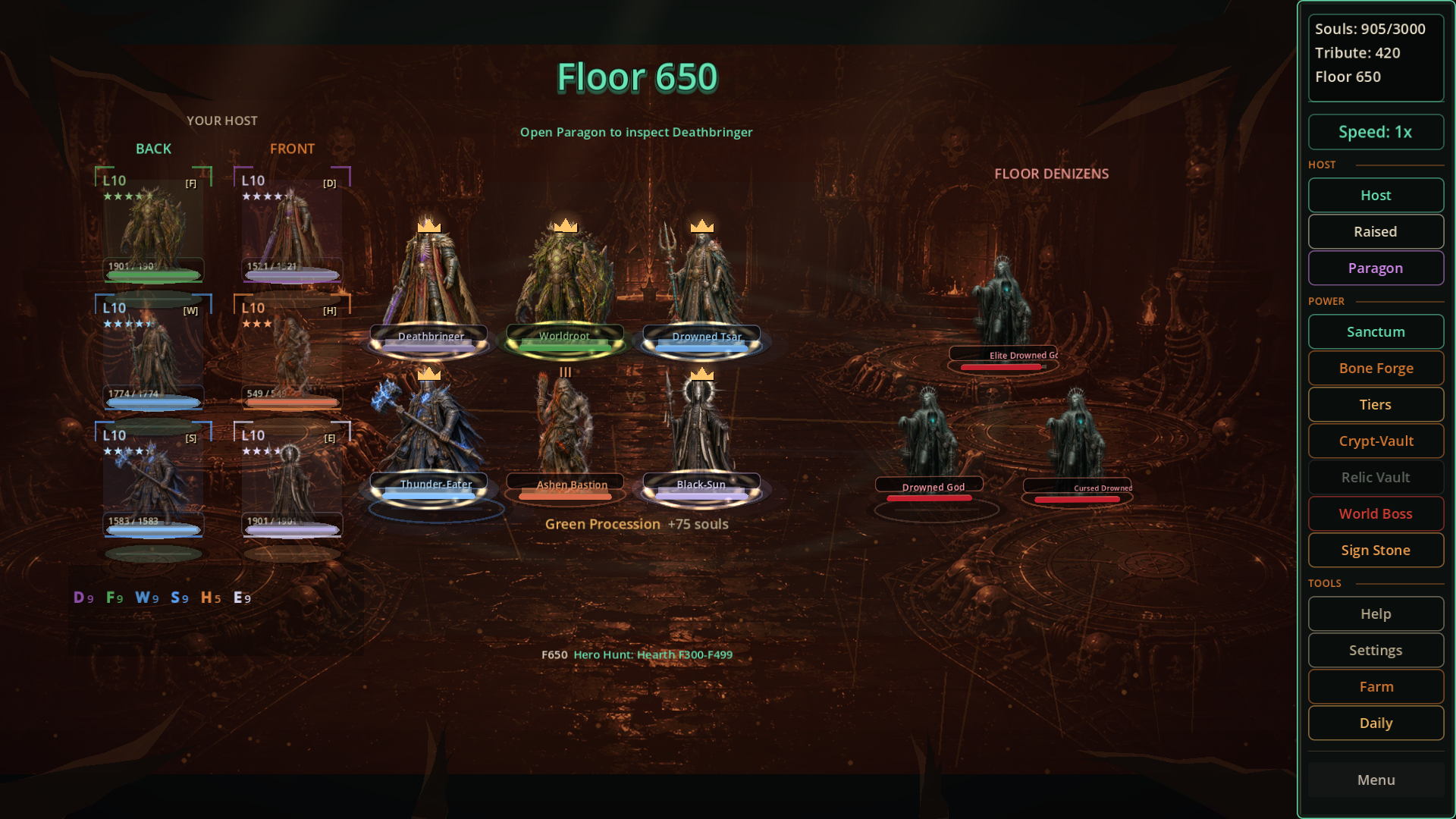
Bonecaller's combat capture includes a visible front-and-back arrangement, the deployed creatures, enemy figures, and health bars. A vertical menu keeps collection and development screens close to the battle view.
This is useful evidence about the game's focus. The army is something you inspect as a group. The creatures and their status remain visible while combat resolves, and the surrounding interface points back toward choices about the Host and its development.
Look at the amount of information on screen as well as the artwork. A strategy game may ask you to return to these labels, bars, and menus repeatedly. You want a presentation that makes you curious enough to learn what they mean.
A screenshot cannot demonstrate the entire pace of combat. Moving footage helps with that: watch how the battle unfolds and how often the presentation directs your attention elsewhere. The relevant question is whether observing the plan feels engaging to you.
The Forge shows a consequential decision
The Bone Forge capture displays hero cards with affinity, role, binding level, and combat stats. It also explains the relationship among a target, source sacrifices, and the result. The target survives development; the selected source material is consumed.
This is a substantial clue about the game you are evaluating. Part of the experience involves reading a collection and committing some of it to a direction. The Forge is a place to make a decision, not merely a decorative crafting scene.
You can assess whether that type of choice appeals before learning its exact requirements. Does comparing several creatures make you want to inspect the possibilities? Does consuming source heroes sound satisfying, or does it conflict with how you prefer to collect?
The capture can also help you judge the density of the interface. It presents explanatory text alongside cards and a preview area. That is part of the practical experience the promotional premise should lead you to expect.
Separate what you see from what you infer
Real gameplay is stronger evidence than a feature list for presentation, but it still has limits. A selected capture can show a system operating. It cannot prove that every hour of progression feels good, that every build is balanced, or that your computer will perform identically.
Similarly, visible keyboard or controller prompts do not establish complete support for every device or every screen. Specific support claims should come from verified release information and direct testing, rather than an assumption drawn from one image.
The current footage also should not be treated as an announcement that the game is available to purchase. Development status and availability are separate facts from the existence of a working battle screen.
These distinctions make the material more useful. You can appreciate what it demonstrates without asking it to answer questions a short clip cannot settle.
Watch for your own next thought
A productive first viewing does not require memorizing the game. It requires noticing what catches your interest after the initial visual impression.
Perhaps you want to know why a particular creature is in front. Perhaps the bench suggests a formation you would try. Perhaps the Forge makes you curious about what a developed hero would contribute. Those are concrete points of connection with Bonecaller's actual activities.
Or perhaps you want more direct control than the automatic battles provide. That is an equally useful discovery. Footage has done its job when it helps you recognize your taste accurately.
Watch Bonecaller's real gameplay, then look again at the screens that hold your attention. The best reason to follow the game is a decision you can already imagine wanting to make.
Game details reflect the September 15, 2026 alpha. See current release information.