 BONECALLER
Choosing a Game
Choosing a Single-Player Idle Game for PC: What to Look For
Consider active decisions, offline limits, payment structure, and real gameplay when choosing an idle PC game, with Bonecaller as a concrete example.
Before choosing a single-player idle game for PC, decide what you want the game to do with your attention. Do you want a project to revisit, a collection to shape, or a mostly passive spectacle? Those experiences can share a genre label while asking very different things of an evening.
Bonecaller offers a useful concrete case. It is a Windows PC game in development, centered on raising an undead army, automatic battles, and persistent development. Here are the questions that help determine whether that particular combination belongs on your radar.
What are you choosing when you are present?
Start with the active decisions. An idle game still needs a reason for your return beyond collecting a larger number. Look for the actions you would enjoy making repeatedly, especially once the initial novelty has passed.
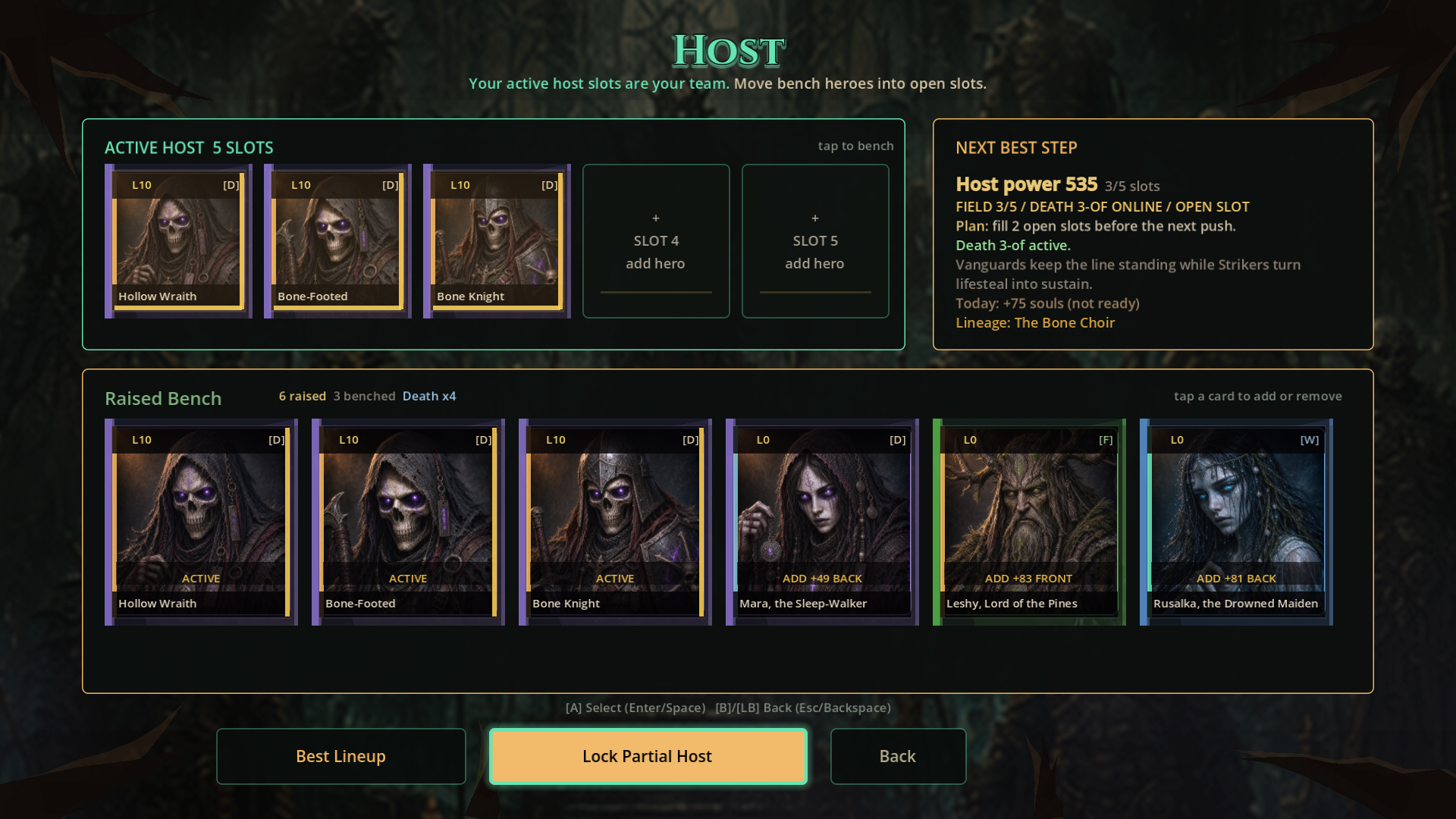
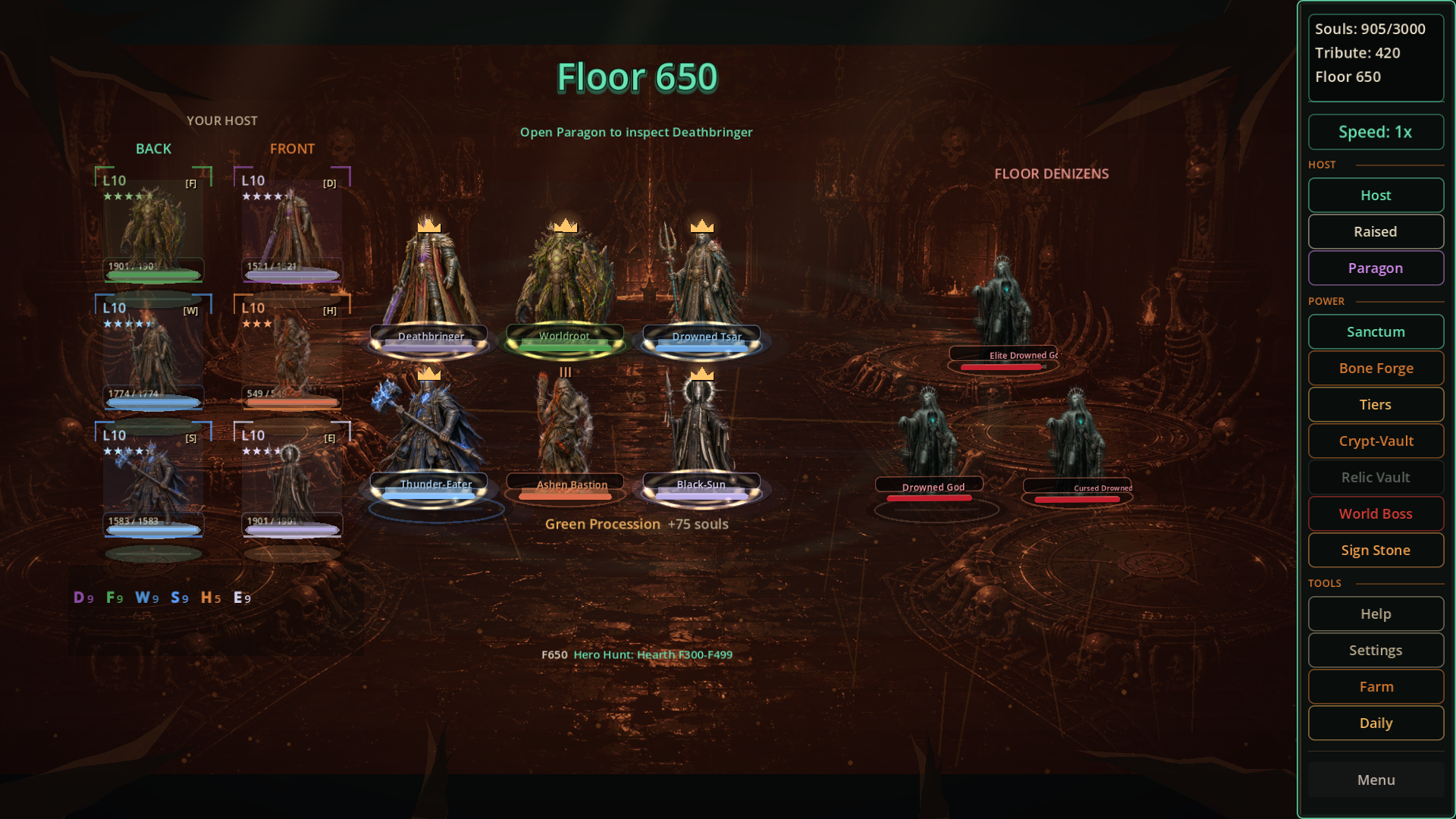
Bonecaller's choices include selecting the Host, arranging front and back rows, developing heroes, and using affinities to shape team bonuses. Its Bone Forge consumes compatible source heroes to strengthen a target and specialize its role.
That describes a collection-and-formation project. If comparing possible teams interests you, the active portion is relevant. If you mainly want direct control over combat, the automatic resolution is a significant taste consideration.
When watching footage, identify one decision you would want to make differently. You do not need enough knowledge to know whether your alternative would succeed. Curiosity about the choice is the useful signal.
What exactly happens while the game is closed?
“Offline progress” is incomplete information. Ask what advances, what stops it, and whether it has a cap. These details determine how the game fits periods when you cannot or do not want to check in.
In Bonecaller's current alpha, offline battles use the saved team and build. They stop after a loss or at specified boss gates, and the simulated time is capped at twelve hours per return. A locked Farm floor repeats rather than carrying the army deeper.
Some rewards are reserved for play while present: offline battles do not roll relic drops or Bone Shards. The return summary reports the results that did occur. That makes the benefit specific rather than an open-ended promise that everything continues unattended.
Compare those rules with your real routine. Someone returning most evenings and someone disappearing for long stretches may experience the same cap very differently. There is no need to treat maximum efficiency as your personal requirement.
Does single-player match your expectations?
Bonecaller is designed as a single-player game. You develop your own Host, and the ordinary battle loop does not require assembling a party of other people.
However, “single-player” alone does not answer every possible question about connectivity, optional services, or distribution. Evaluate those details from the current official release information when they matter to you. A broad category should not stand in for a specific promise about how every feature works.
For taste, the core distinction is clear: the army is your project. You do not need to enjoy competitive drafting against another person to be interested in its formation decisions. The opponents and progression systems supply the constraints.
How does the game ask you to pay?
Payment structure shapes the context around a collection. It is useful to know whether chance-based recruitment is part of ordinary play or attached to spending, and whether recurring purchases are part of the intended experience.
The current Bonecaller Windows alpha is free to download, with optional donations on itch.io. There is no paid currency or paid random reward. Eligible hero raises are gameplay rewards. A cosmetic supporter pass is planned but is not on sale in v0.1.4; check official release information for the current offer.
It also does not remove randomness. A game can avoid paid pulls while still asking you to repeat eligible encounters for a recruit. Decide whether you enjoy that uncertainty on its own terms.
Is the PC experience evidenced?
Look at actual interface captures rather than judging the entire experience from promotional art. Readable text, understandable controls, and useful summaries matter in a game that asks you to inspect a collection repeatedly.
Hardware suitability is a separate question. Footage can show an interface and a battle, but it cannot establish performance on your computer or confirm controller support. Wait for verified requirements and support details before making those assumptions.
Bonecaller's current material comes from an alpha. That makes footage valuable evidence of what exists while leaving room for changes before release. Avoid translating an attractive screen into a guarantee about a finished product.
A practical decision at this stage
You do not need a verdict on every late-game system to decide whether to follow Bonecaller. You need evidence that its central activity appeals: gathering creatures, choosing a formation, and revisiting that plan as the descent develops.
Watch the gameplay, inspect the visible decisions, and compare the offline rules with your routine. If both fit, the official site is the place to return for release information. That is a more useful basis for interest than the idle label alone.
Game details reflect the September 15, 2026 alpha. See current release information.