 BONECALLER
Discover Bonecaller
When the Enemy Could Become Your Next Recruit
See how Bonecaller connects recruitment to exploration: eligible enemies can become heroes, giving each new stretch of the descent another reason to matter.
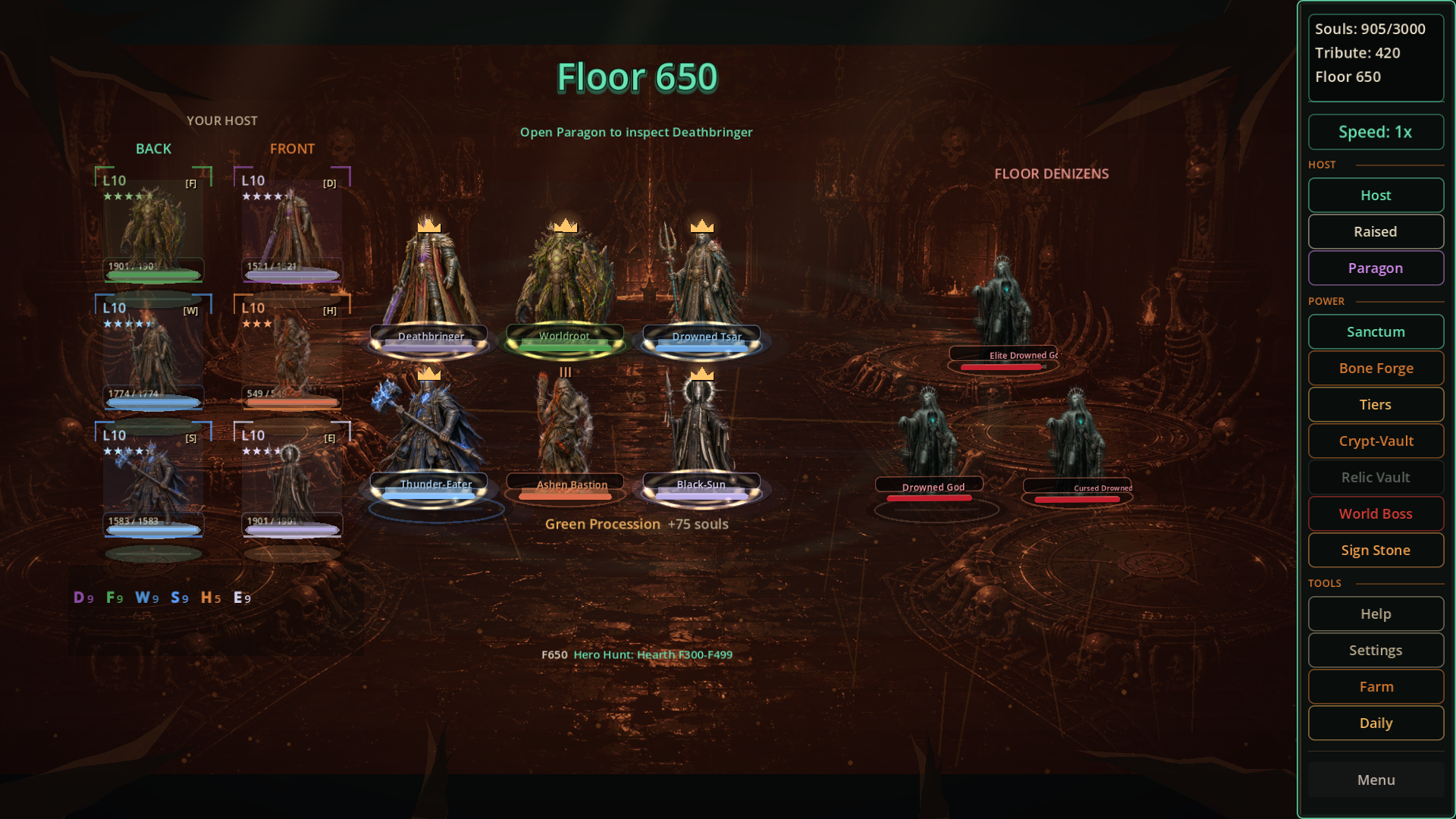
A new enemy can give you two reasons to pay attention: you need to defeat it, and you may want what it could add to your army. Bonecaller builds its collection around that connection. Eligible defeated enemies can yield heroes, so meeting a threat can also introduce a possibility for the Host you are building.
For someone discovering the game, this is more than a recruitment detail. It changes what progress into unfamiliar territory can mean. The next stretch of the descent may expand your choices, even before you have decided which of those choices to pursue.
Discovery can change the question
At the start, a collection is small enough that the immediate concern is often what you can field at all. As more heroes become available, the question can become what you want the army to do.
Bonecaller's heroes have both an affinity and a role. Finding another durable front-line option is different from finding a fragile damage dealer. Encountering heroes from a new affinity can also point toward bonuses your current formation does not provide.
That means exploration can alter the plan instead of simply supplying more material for an unchanged one. You might become curious about a team that slows enemies, or a team that leans into damage reduction, because the collection has begun to make that idea conceivable.
These are possible player responses, not prescribed milestones or tested builds. Their value is showing why a new recruit can matter beyond its individual stats.
The connection to place is visible
Bonecaller shows the available heroes for the current floor in battle and the exact selected-floor pool in Farm. Different portions of the descent provide different recruitment opportunities, with some overlap among routes.
That information gives a collection goal a location. If a certain kind of hero interests you, there is a relationship between pursuing it and choosing where the army fights. The reward is not entirely detached from the encounter that produced it.
For a prospective player, that makes the world and the collection easier to connect. You can remember a creature as something associated with a stretch of the journey, rather than merely another entry delivered by an unrelated menu.
It also gives the game a useful decision: continue into unknown encounters, or return to a cleared floor whose recruitment pool interests you. One choice expands what you have seen; the other concentrates effort on something you already want.
A possibility is still a possibility
Eligible raises are chance-based. Defeating an enemy does not mean that it joins the collection every time, and not every enemy is an ordinary recruit. Certain heroes come through milestones or other systems instead.
The current game includes protection for eligible first copies, building pressure toward a guaranteed result. That helps distinguish a first acquisition from an endlessly identical chance, but it should not be turned into a promise about how many minutes your particular collection will take.
Your available encounters, victories, and current collection all matter. A desired hero can be a project rather than an immediate reward. The enjoyment of pursuit is therefore part of the game's appeal, and patience with uncertainty is part of its fit.
That is worth considering honestly. If you only enjoy a collection when every acquisition arrives on a fixed schedule, the link between combat and recruitment may not remove your frustration with randomness.
More recruits can create more decisions
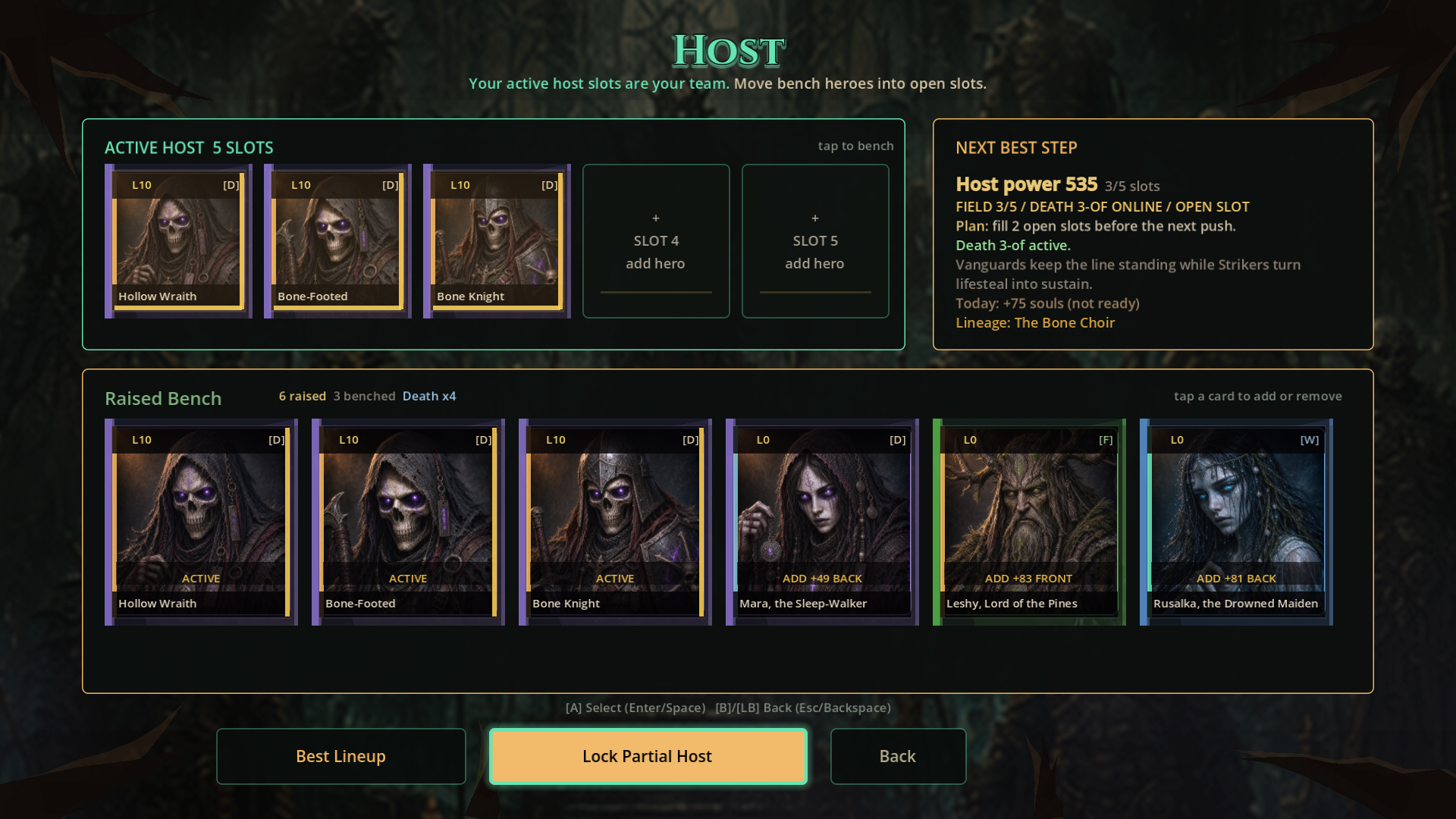
The active Host eventually holds six heroes. A larger collection cannot simply be placed on the battlefield all at once. New options ask you to reconsider the composition or keep them for another purpose.
Duplicate raises can also become Echoes within the game's limits. These are material for early Forge development rather than a separate fighting hero automatically added to the formation. The broader collection feeds the development of a more focused team.
That makes a successful recruitment useful in several possible ways. A first copy can broaden the roster. Compatible collection material can support a chosen Forge direction. A hero you do not currently deploy may still belong to a future plan.
The exact value depends on your state and intentions. The important design idea is that gathering and choosing remain connected, even after the first few places in the Host are filled.
Exploring for a team you have not built yet
Some exploration is driven by scenery or story. Bonecaller's descent can also be driven by a mechanical kind of curiosity: what could I make with the creatures ahead?
That question suits players who enjoy seeing future combinations in an incomplete collection. An unfamiliar affinity or role can become a reason to look closer, and the army you eventually field can reflect several discoveries rather than a single initial choice.
An unfamiliar enemy can therefore be the beginning of a plan. See Bonecaller's battle and collection screens for a look at the journey from encountering a creature to finding a place for it in the Host.
Game details reflect the September 15, 2026 alpha. See current release information.