 BONECALLER
The World
Meet Bonecaller's Creatures and the Armies They Suggest
Meet Leshy, Rusalka, and Domovoi through their roles in Bonecaller's Slavic-inspired world, with game mechanics kept distinct from claims about folklore.
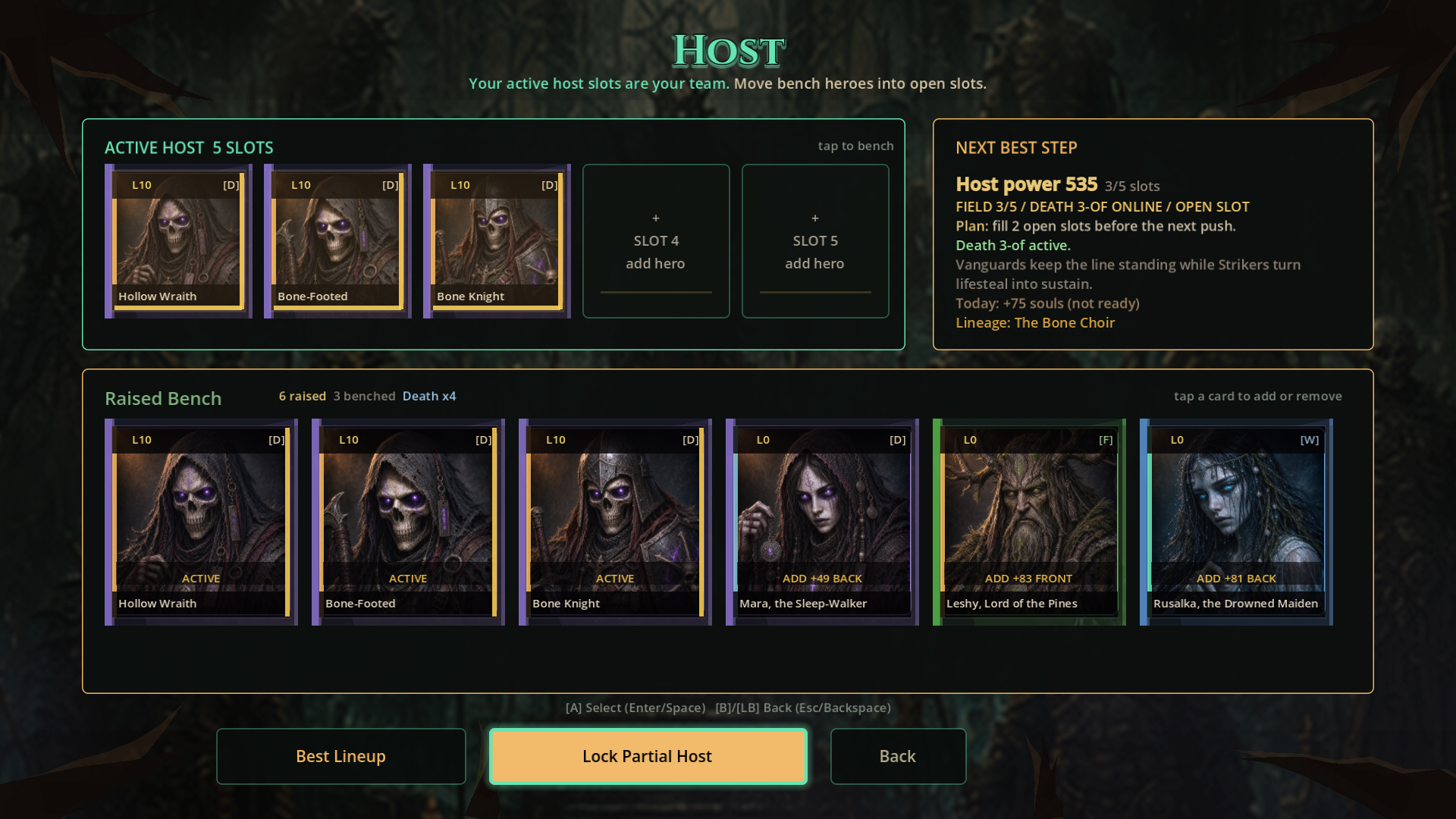
Leshy, Rusalka, and Domovoi are names you may encounter in Bonecaller's creature roster. The game describes its dark-fantasy world as Slavic-inspired, but the immediate invitation is practical: discover what these creatures do in this particular game and imagine which ones belong in your undead army.
You do not need prior knowledge of folklore to understand a formation. Bonecaller gives its heroes roles, affinities, and places in a collection. Those authored game rules provide the context for the introduction below; they are not claims about what a figure means in a historical tradition.
Start with the creature on the screen
A name can spark curiosity before you know anything else about a character. In a strategy game, the next useful question is what that character contributes. Is it a protector, an attacker, or a faster, more fragile member of the team?
Bonecaller calls the active team the Host. Its heroes combine a role with an affinity, so you can read a creature along two dimensions: its own combat emphasis and the shared bonuses it can help the group reach.
This gives an unfamiliar name an immediate foothold. You can consider where the hero belongs without first learning a cultural background. Later curiosity about the inspiration can be worthwhile on its own, but it is a separate inquiry from understanding the game.
For a new viewer, that gives every portrait something to communicate beyond its appearance. You can appreciate the art and still ask a concrete question about how the creature would fit beside the others.
Leshy: a Forest protector in this roster
Bonecaller's Leshy is listed as a Forest Vanguard. Vanguard profiles emphasize health and defense, making the front line their recognizable job. Forest affinity contributes damage reduction when the Host reaches its synergy thresholds.
For a new viewer, those two labels form a coherent first impression: a creature associated with an army's ability to endure. You do not need exact percentages to see why someone who likes durable formations might want to examine it.
The surrounding Forest roster includes other jobs. Polevik is listed as a Striker, while Kikimora is a Warden. Sharing an affinity does not mean sharing an identical role, which gives a themed formation room for internal differences.
These are introductions to their starting roster identities. Development systems can change a forged hero's role, so the collection is also material for later decisions.
Rusalka: another direction for the Host
Rusalka is listed as a Water Striker in Bonecaller. A Striker emphasizes attack, while Water's team synergy slows enemies. The same creature therefore offers both an individual damage-oriented profile and a contribution toward a group effect.
The Water roster also includes Vanguards such as Vodyanoy and a Warden in Beregynia. A shared theme can contain the pieces of a formation rather than only a series of competing attackers.
For a player considering the game, this makes the roster interesting to browse. The question becomes which relationships you want among the creatures. A name and portrait invite attention; role and affinity suggest what that attention could lead you to build.
Water also introduces an appealing question about pace. Slowing an enemy offers a different direction from simply increasing the army's damage. A player drawn to controlling a fight's tempo may find a reason to explore the roster here.
Domovoi and the Hearth formation
Bonecaller places Domovoi in Hearth as a Vanguard. Hearth's synergy develops defense and, at higher thresholds, retaliation. It offers another vocabulary for resilience: an army can become harder to damage and gain a way to respond when struck.
The Hearth roster also includes Bannik as a Warden and Khovanets as a Seer. A Seer's faster, more fragile profile brings a different concern from the durable front line. Placement and protection still matter inside an affinity group.
That is enough to make Hearth distinct as a game choice without giving away the later collection or reducing the entire roster to a shopping list. You can recognize a style of formation and decide whether it interests you.
Placed beside Forest and Water, Hearth gives resilience another distinct form. The roster can invite you to compare styles even before you settle on a favorite creature.
Familiarity is optional; curiosity helps
Bonecaller introduces its army through play and through visible roster information. Eligible encounters can yield heroes, and different stretches of the descent offer different recruitment pools. The collection gives you a way to become familiar with creatures through the jobs you assign them.
You might arrive because a particular name already interests you. You might arrive knowing none of them and become interested because a formation suggests itself. Both are valid ways into the game.
The current alpha's gameplay and screenshots show how these ideas are presented. Look first at the creatures and then at the relationships the interface describes. The most useful question is which member of this particular Host you want to meet next.
Game details reflect the September 15, 2026 alpha. See current release information.