 BONECALLER
Game Design
Power and Identity: Why Another Formation Can Be Interesting
An army's value comes from the jobs its members do together. Explore how Bonecaller's roles and affinities give different formations a practical identity.
“Stronger” is a useful goal until it stops explaining what you want to change. An army may need to survive longer, apply pressure earlier, recover from damage, or make better use of a particular bonus. Those are different intentions, even if each eventually contributes to winning a battle.
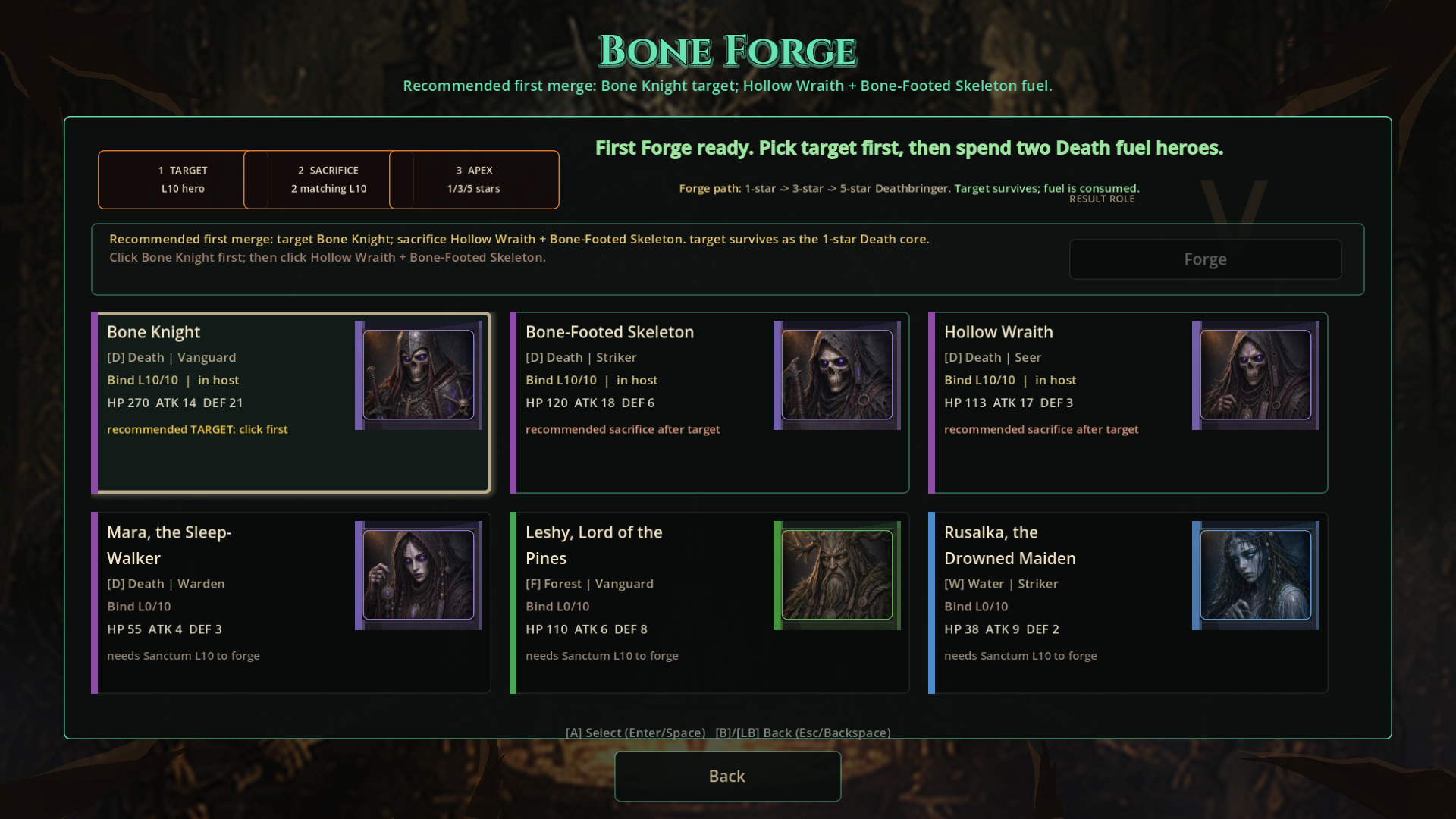
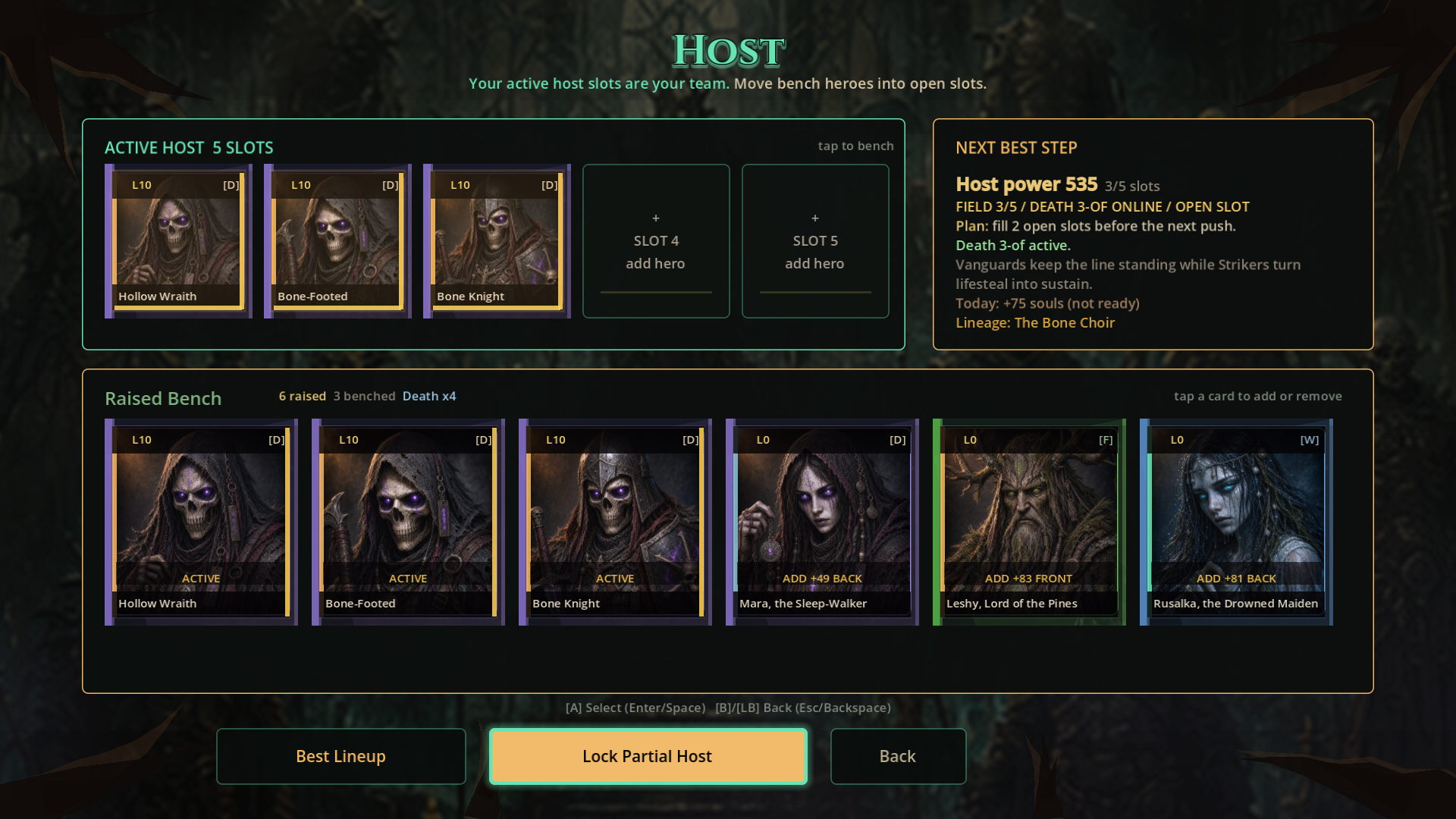
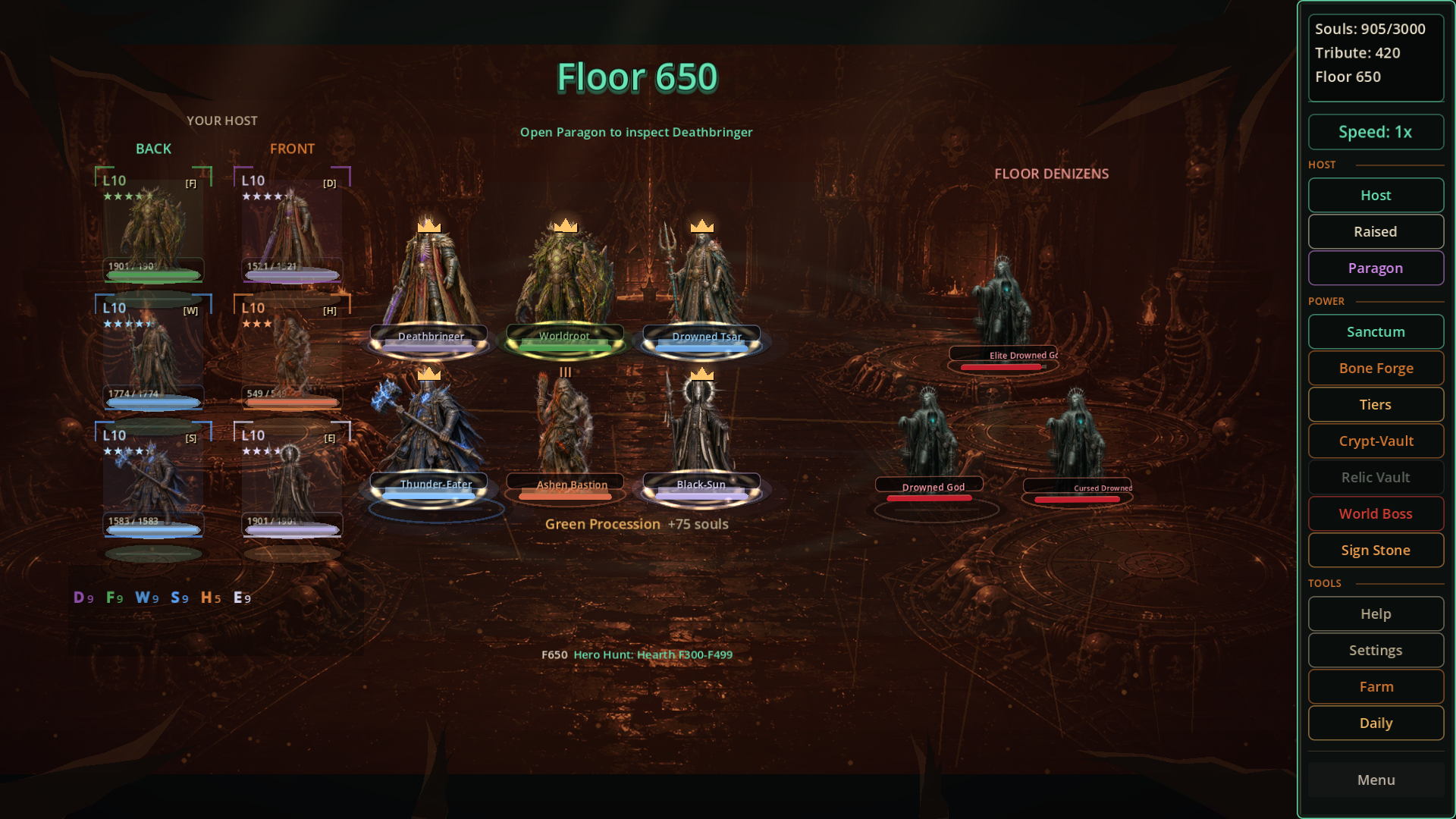
Bonecaller's formations give those intentions a place to live. You choose a Host from your raised collection, combine roles and affinities, and develop heroes toward specific jobs. That creates room to ask what kind of army you want, alongside how much power it has.
One total cannot explain every relationship
A team summary can help you compare development, but a single value cannot describe every consequence of composition. Position, role, and shared effects are relationships among the members, not simply properties of one hero.
In Bonecaller, front-row heroes take more direct pressure. A durable Vanguard can therefore support a fragile attacker by helping the front line remain intact. Removing that protector changes the attacker's circumstances as well as the total of the team's stats.
Affinity thresholds add another relationship. A hero may be valuable because its contribution activates a group bonus. Replacing it with an individually impressive alternative can change more than one number on the battlefield.
This does not mean you should ignore strength or choose a weaker army for its own sake. It means the reason a formation works can be more specific than its aggregate power.
Identity can describe a practical preference
Imagine two prospective players looking at the same collection. One is drawn to an army that endures pressure. The other wants a force that creates damage quickly. Neither preference guarantees a winning build, but each gives the player a different question to investigate.
Bonecaller's affinity effects supply concrete language for those questions. Forest offers damage reduction. Death supports lifesteal. Water slows enemies. Storm increases attack and, at higher thresholds, critical chance.
These are examples of mechanical identity. The army's theme is expressed through what it tries to do. A defensive plan and an aggressive plan are different because of how they meet the encounter, not merely because their colors differ.
That can make a collection more interesting to a player with a clear taste. You may enjoy finding ways to support a preferred style while still adapting to the game's demands.
A mixed formation can express a relationship
An affinity-focused team pursues shared bonuses directly. A mixed team can seek a different combination of strengths. Forge development changes this choice because a developed hero contributes more affinity points. The number of creatures with an affinity and the strength of its active bonus are therefore different questions.
For a concrete illustration, a five-star hero contributes nine affinity points, enough to activate that affinity's highest ordinary threshold on its own. A developed Forest anchor can therefore supply Forest's top synergy while other places in the Host remain available for different affinities. That is a mechanical example, not a tested best formation.
The important change is what a free slot can mean. You can look at the protection already supplied and ask what would complement it. Perhaps another member should apply pressure or bring a different shared effect. Development has changed the composition question, rather than merely increasing every number inside the original answer.
Those are hypotheses the game can test. A formation has an identity when you can explain what its members are meant to accomplish together, even if the first version needs revision.
Taste does not erase constraints
A favorite creature still has to function within the rules. The active Host has limited space, development takes resources, and different encounters place different demands on the army. An appealing concept may need adjustment before it works.
That tension can be part of the pleasure. The task is to connect a preference with an effective arrangement. You preserve what interests you while learning which supports it requires and which compromises help it work.
The encounter provides a test for the idea. If a favorite creature struggles, the rest of the formation becomes an interesting place to look: what could give it more time, better support, or a more suitable job?
The useful question is whether adapting an idea sounds enjoyable. For a player who likes that process, a constraint gives the idea something to work against.
Different can be informative before it is better
Trying another formation can help reveal what the previous one was doing. If the battle changes, you gain a reason to examine the role of the altered member or bonus. The comparison can make a mechanic easier to understand.
That is one reason a new arrangement can be interesting even before you know whether it is an upgrade. It tests your interpretation of the team. You learn which parts of your mental picture were useful and which need revision.
Bonecaller's automatic combat puts that preparation-and-observation loop at the center of play. If the process appeals, there may be value for you in an army you can rethink as the collection develops.
See the Host in action and look at the jobs its members do together. An army can have a recognizable approach to a fight, and developing that approach gives you another reason to explore what the collection can become.
Game details reflect the September 15, 2026 alpha. See current release information.