 BONECALLER
Choosing a Game
Can an Idle Game Respect Your Time? Read the Offline Rules
Understand Bonecaller's offline progress: saved-team battles, a twelve-hour cap, stopping gates, and rewards that make the benefits and limits concrete.
An idle game respects your time only if its rhythm works for the life you actually have. Offline progress can help by letting a plan produce results while the game is closed. It can also create expectations around returning, especially when there is a cap. The useful approach is to examine the rules before turning “idle” into a promise of effortless progress.
Bonecaller's current alpha has a defined offline system. It simulates battles using your saved army and reports the result when you return. That offers something concrete, with boundaries that matter just as much as the rewards.
Your saved plan does the work
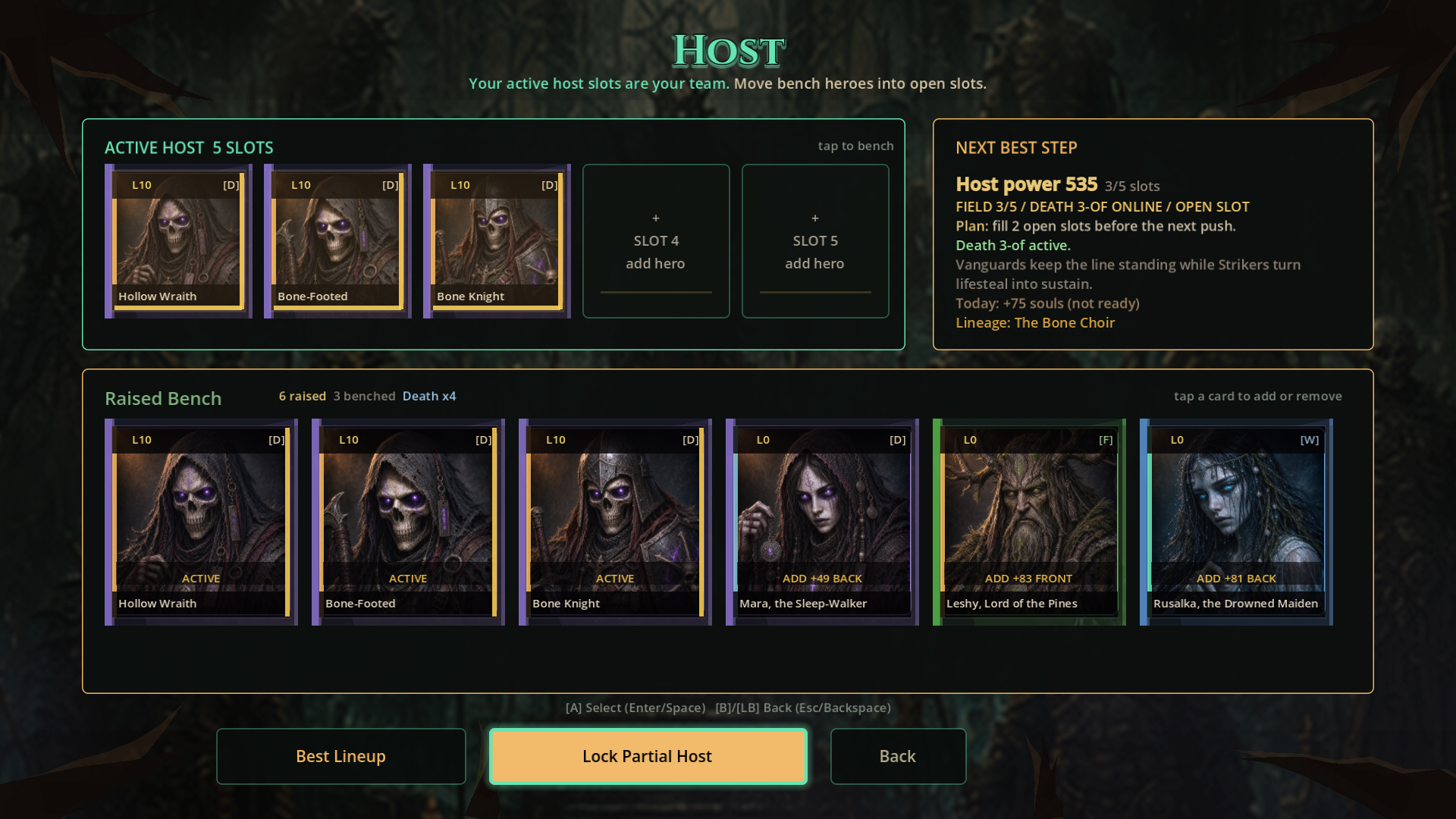
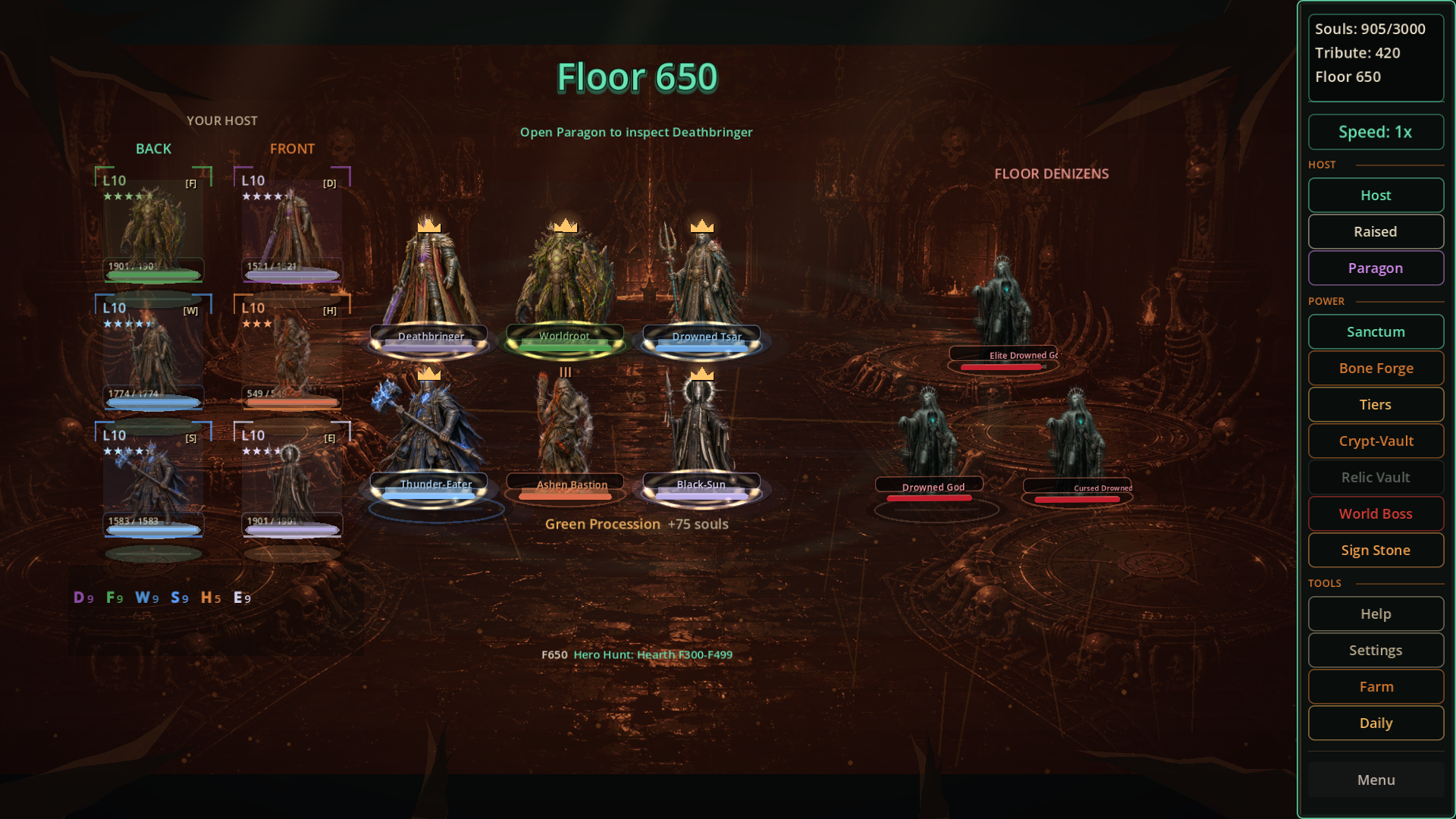
The offline simulator uses the Host and build that were active when the game was saved. It resolves battles in sequence, applying the relevant team development and bonuses. Results can therefore depend on how well the army is prepared for what lies ahead.
This is useful if you enjoy making a decision and revisiting its consequences later. The army can continue through eligible encounters without requiring you to watch every ordinary fight.
It also means time away is not a universal solution to a weak formation. If the saved team loses, the simulation stops. A longer absence does not keep awarding victories for a fight the army could not win.
For someone considering Bonecaller, this preserves a connection between preparation and progress. The part you can delegate to time is execution within the system's limits, while the plan remains yours.
The cap describes the offer honestly
The current rules simulate one battle per thirty seconds away, capped at twelve hours of simulated time per return. That is a ceiling on the opportunity to simulate battles, not a guarantee that the army will use the full allowance successfully.
For example, a two-hour absence supplies time for up to 240 simulated battles: 7,200 seconds divided by thirty. A defeat or a stopping gate can end the sequence before that number. It would be misleading to translate those two hours into a promised number of floors or recruits.
A cap also means longer absences do not accumulate progress indefinitely. A player who returns after several days should not expect every hour away to become additional battles.
Whether that feels comfortable is personal. You can understand the cap without deciding to organize your day around it. Maximum accumulation is an available optimization concern, not an obligation the reader must adopt.
Some moments wait for you
Bonecaller's offline descent stops before specified boss gates that require a player decision. Those encounters remain something to enter while present. The system also respects Farm mode: if the army was set to repeat a cleared floor, offline battles repeat that floor.
This makes two different kinds of return possible. You may come back with ordinary progress completed, or you may find the army waiting at a point that needs your attention. Both are consistent with the design.
Stopping at a gate does reduce how much can happen during an absence. It also keeps a consequential encounter from being passed without you. The rule is a trade-off between automation and presence, not evidence that every return will include the same amount of progress.
If your ideal idle game should advance through every system while unattended, this boundary is important. Bonecaller leaves meaningful portions of development and progression to active decisions.
Offline rewards are a defined subset
Successful offline battles can produce ordinary battle rewards and eligible hero raises, along with applicable progression rewards. The return receipt reports what actually happened, including wins, floors, Souls, and other gains where relevant.
Offline battles do not roll relic drops or Bone Shards. Weekly participation actions are also not fabricated by leaving the game closed. Those distinctions prevent “progress while away” from being mistaken for “every activity happens while away.”
For a prospective player, the receipt matters because it closes the loop. You need to understand the result of the plan you left running. A useful summary can turn a return into a decision point instead of leaving you to guess why the army stopped.
The exact rules are available in the official offline-progress reference if this feature is central to your interest.
Fit is more useful than a blanket promise
Bonecaller's offline system may suit someone who enjoys preparing an army, leaving it to eligible routine battles, and returning to choose the next step. It will not deliver unlimited accumulation or remove the need to revisit a struggling team.
That is enough to judge the basic fit without claiming the game will respect every player's time in the same way. Your tolerance for caps, repetition, and intermittent decisions matters alongside the feature itself.
Watch Bonecaller's gameplay to see the active side of the loop. Offline progress is valuable when it supports decisions you already want to make on your return.
Game details reflect the September 15, 2026 alpha. See current release information.