 BONECALLER
Army & Strategy
Bosses as questions for your army
Explore how Bonecaller's boss behaviors turn army preparation into a challenge, and decide whether planning a response appeals more than timing an attack.
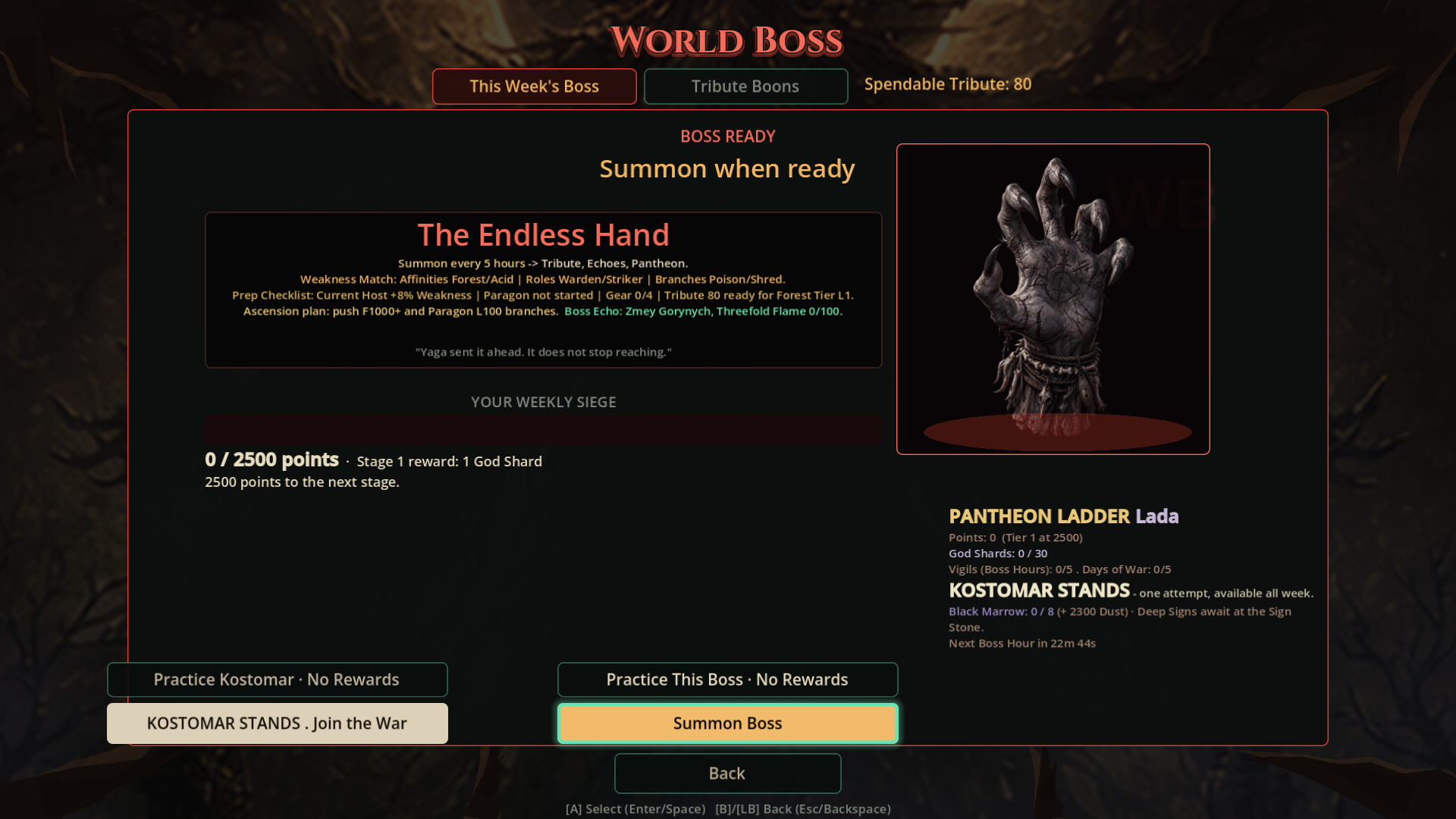
A boss can expose a decision you made several fights ago. The fragile attacker you protected, the defensive hero you left out, the damage type you built around: suddenly those choices have consequences. That is the kind of boss challenge Bonecaller is designed to offer. Its battles resolve automatically, so the central question is whether the army you prepared can answer the enemy in front of it.
Enjoying difficult bosses can mean enjoying the moment their behavior finally makes sense. You understand a problem, change your approach, and see the result of that decision on the battlefield. Bonecaller's boss design gives that preparation a central place in the encounter.
A recognizable problem gives a formation a purpose
In Bonecaller, your active army is called the Host. Its members have roles, affinities, equipment, and positions. A durable front line and a fragile damage dealer contribute in different ways, even before a boss's particular behavior enters the picture.
Consider the Silent Choir, one of the game's rotating weekly bosses. Its signature behavior restores some of its health during battle. That creates a different question from simply surviving a large opening hit: can the Host make lasting damage stick while the fight continues?
The Echo of Chernobog asks something else. Its Siege Footfalls temporarily reduce the team's attack. A formation's damage on an ordinary floor does not tell the whole story once the boss interferes with that damage. The enemy's behavior becomes part of what the player is preparing for.
Together, these encounters give preparation different purposes. Recovery asks the army to keep making damage stick. An attack reduction tests what happens when its offense is interrupted. A collection becomes more interesting when the enemy gives you a reason to look at it differently.
The appeal is in the explanation after the fight
Imagine watching a promising attacker fall before making much of a contribution. There are several possible interpretations. Perhaps it needed more protection. Perhaps the rest of the team could not create enough time. Perhaps the formation was poorly suited to that enemy.
Those observations give your attention somewhere useful to go after defeat. A critical hit can change an individual result, so comparing encounters helps distinguish a recurring weakness from one unfortunate fight. You are beginning to understand the army you assembled.
For a player who enjoys building systems, that can be the interesting part of a boss encounter: finding an explanation that suggests a meaningful next choice. Increasing strength remains useful, but the thought process need not end with “wait until every number is larger.”
Bonecaller's weekly bosses also have declared weaknesses involving affinities, roles, and combat properties. This gives a collected hero a potential reason to matter beyond its place in a general power ranking. A specialist can be interesting because of the problem it addresses.
Automatic combat changes what mastery looks like
An auto-battler places direct control in the preparation. Once the encounter starts, that preparation plays out. The suspense comes from seeing whether a protected attacker gets the time it needs, whether a durable front line holds, or whether the army can maintain its pressure.
What takes its place is authorship at the formation level. You decide which creatures share the field and how their strengths fit together. The battle then makes that decision visible. Watching can be satisfying when you care about the plan being tested.
This also changes what a good boss victory means. The achievement may lie in noticing a weakness in the Host and correcting it, rather than executing the same sequence with fewer mistakes. The game's appeal depends on whether that kind of improvement feels rewarding to you.
The current game also includes free boss practice for making comparisons before a reward attempt. That gives a promising idea somewhere to be tested. You can come to the encounter with a more informed plan while still watching to see how this particular battle unfolds.
A boss should make more of your army relevant
A collection game can make its roster feel narrow if every new enemy favors exactly the same arrangement. Rotating boss questions offer another possibility: different pieces of the collection can have different moments of relevance.
Bonecaller currently has five standard weekly bosses. Their signatures and weaknesses vary, and later stages can open additional weakness routes. That variety gives alternative formations a purpose. The next interesting development in the collection may be the piece that answers a problem your established army handles less comfortably.
The distinction matters when evaluating a game before release. A large roster tells you how much there is to collect. Enemy design helps tell you whether you might have reasons to think about that collection.
If your favorite part of a difficult encounter is understanding why your plan worked, Bonecaller's approach is worth a look. Watch the actual gameplay and pay attention to the relationship between the army on screen and the decisions around it. The question is whether you want to be the person who builds that answer.
Game details reflect the September 15, 2026 alpha. See current release information.