 BONECALLER
Discover Bonecaller
A Dark-Fantasy Army with a Direction You Choose
Bonecaller's creatures bring more than atmosphere. Explore how roles, affinities, and the Bone Forge let you shape a dark-fantasy army around a purpose.
A dark-fantasy army is more interesting when its appearance and its decisions belong to the same idea. An imposing protector should give you a reason to put it in front. A fragile, eerie attacker should ask for some care. The creatures can establish the mood while their relationships give you something to think about.
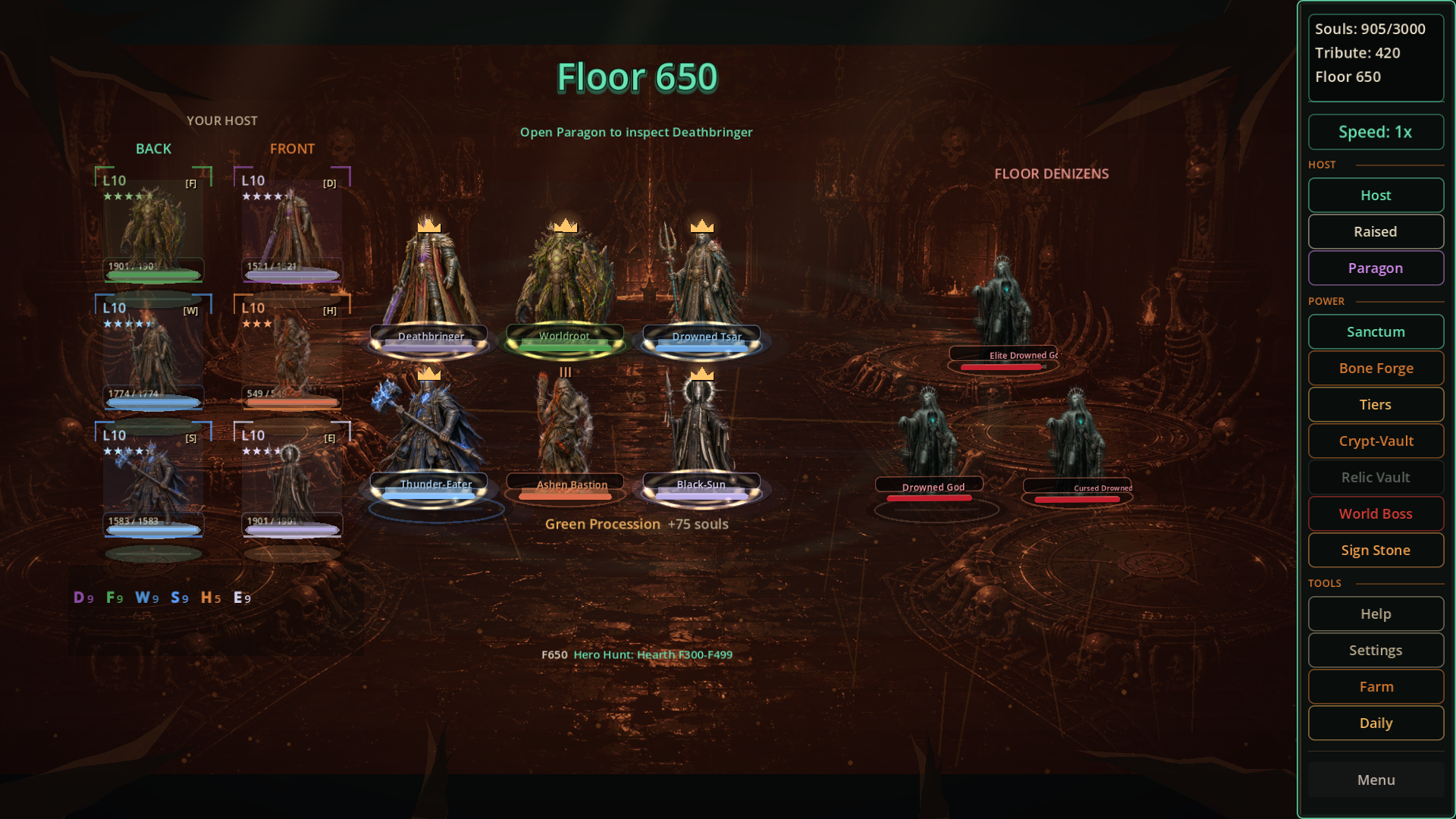
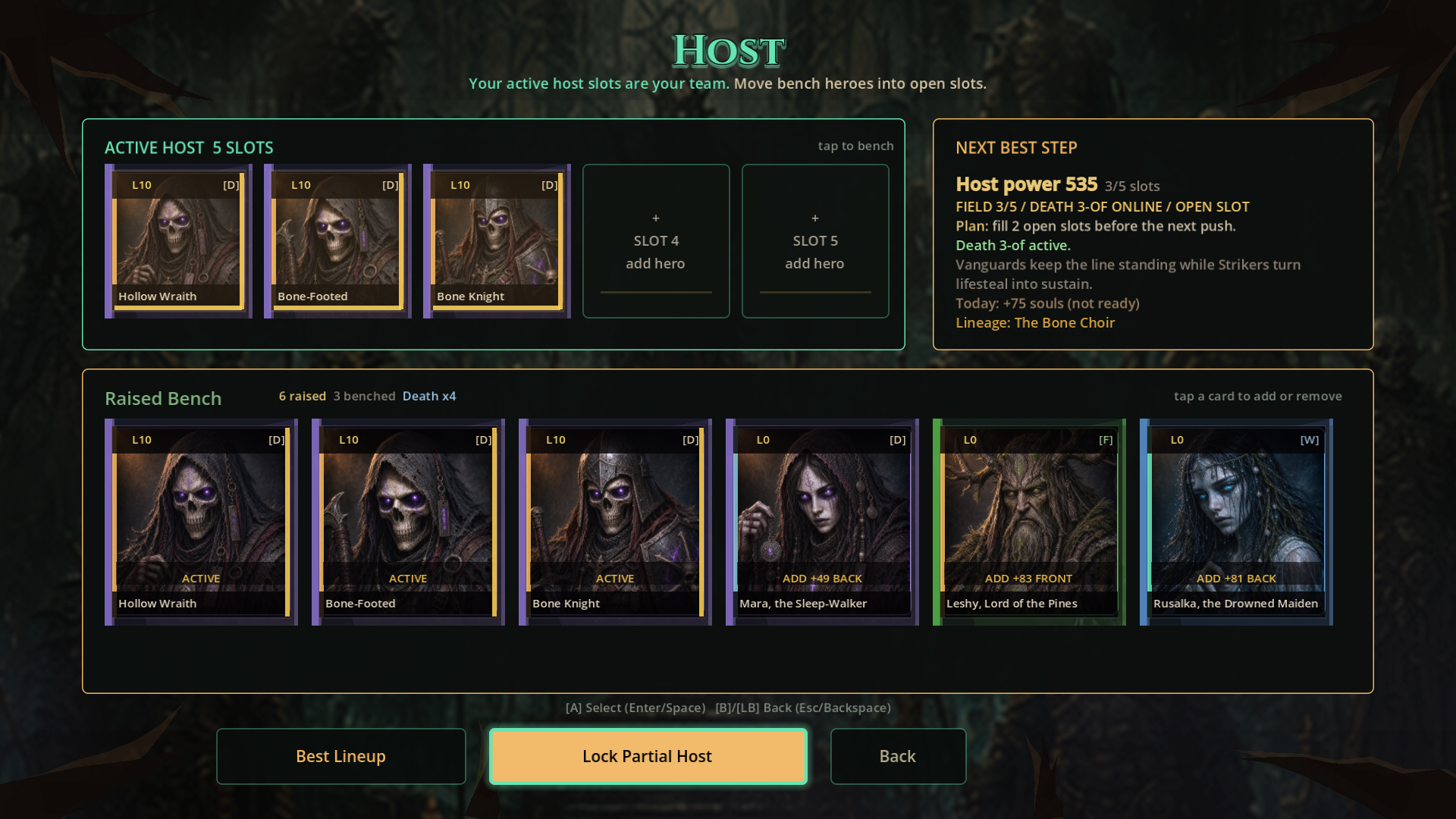
Bonecaller approaches dark fantasy through the army you assemble. You are a necromancer raising eligible defeated enemies, choosing a Host, and developing its members across repeated descents. The game offers a collection to work with, but the fielded formation remains a selection you make.
A collection does not choose its own identity
Owning several creatures and deciding which ones should fight together are different pleasures. The first is discovery. The second is authorship within rules: what do you want this group to do, and which creatures help it do that?
Bonecaller's active Host eventually has six places. That limit creates a frame around the collection. A creature cannot earn a place simply because it exists; it must contribute something you want from that particular formation.
Heroes bring defined affinities and development possibilities to that choice. The enemies you face and the creatures you have raised give the army a starting shape; your decisions determine which of those possibilities you pursue.
The resulting army can still feel like a chosen direction. You may be drawn to a force that endures punishment, one that recovers health through attacking, or one that puts more emphasis on speed and damage. The theme acquires a practical shape.
Different affinities suggest different armies
Forest affinity reduces incoming damage once its synergy is active. Death supplies lifesteal. Water reduces enemy speed. Storm contributes attack power and, at stronger thresholds, critical chance.
These effects give distinct meanings to familiar strategic desires. “I want my army to last” can lead you toward absorbing damage, recovering from it, or reducing the enemy's pace. None of those descriptions guarantees that a particular team will beat a particular encounter. They show that durability and pressure can come from different sources.
Consider a purely illustrative choice between adding a Forest hero and adding a Water hero. The first might help activate a damage-reduction threshold; the second might help activate a slowing effect. Which belongs depends on what the rest of the Host already supplies and what the enemy demands.
That is the sort of decision that can make a dark-fantasy collection feel more substantial than a gallery. The creature's category affects the way the army behaves.
Roles keep the group readable
Affinity is only one part of a hero. Roles describe a different axis: what kind of combat profile that hero brings. A Vanguard emphasizes the durable front line. A Striker emphasizes damage. Wardens lean toward health and defense, while Seers bring a faster, more fragile profile.
As a result, sharing a visual or thematic direction does not mean every member does the same job. An army needs relationships among its parts. The creature enduring direct pressure and the creature using that protection can both be essential to the plan.
The rows reinforce those relationships. Back-row heroes face less direct pressure while a front line remains. You can understand why an exposed damage dealer and a protected one represent different situations without knowing every calculation behind the battle.
For someone deciding whether to follow the game, this is useful evidence. The atmosphere has a structure you can learn, and the composition offers something to inspect beyond the portraits.
Development can narrow a broad collection
The Bone Forge turns compatible heroes into more developed forms of a chosen target. Sources are consumed, and a role choice determines the forged hero's stat emphasis. Collection therefore feeds commitment.
That creates a productive tension for some players. You have gathered options, but investing in a direction means choosing what matters now. A future army begins as several pieces that have not yet been brought together.
Other players prefer keeping every collectible untouched. If that is you, the Forge deserves attention before the artwork alone sells you on the premise. Consuming collection material is a central part of this game's development loop.
The relevant appeal is building something deliberate from what you encounter. It asks for patience as well as taste, because eligible raises are chance-based and a desired formation will not appear complete on demand.
Let the actual screens establish the mood
Dark-fantasy artwork can make a promise in seconds. A game needs to sustain that promise through the interface and actions you spend time with. In Bonecaller, that includes examining the Host, following automatic battles, and deciding how to develop the collection.
The current alpha's real gameplay is the best place to judge whether those screens support a world you want to inhabit. Look at the creature presentation, then at the information surrounding it. Both will be part of the experience.
Explore Bonecaller's gameplay for a closer look at those creatures and their formations. The portraits establish the world; the relationships among them give you an army to imagine and a direction to pursue.
Game details reflect the September 15, 2026 alpha. See current release information.